|
previous year -
next year
 December 21, 2007
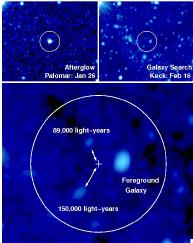
'Shot in the Dark' Star Explosion Stuns Astronomers
Last January, NASA's Swift satellite detected another gamma-ray
burst and quickly sent its alert to ground-based astronomers. Palomar
Observatory's 60-inch telescope was one of the first to respond,
using HPWREN for data transmissions.
 December 10, 2007
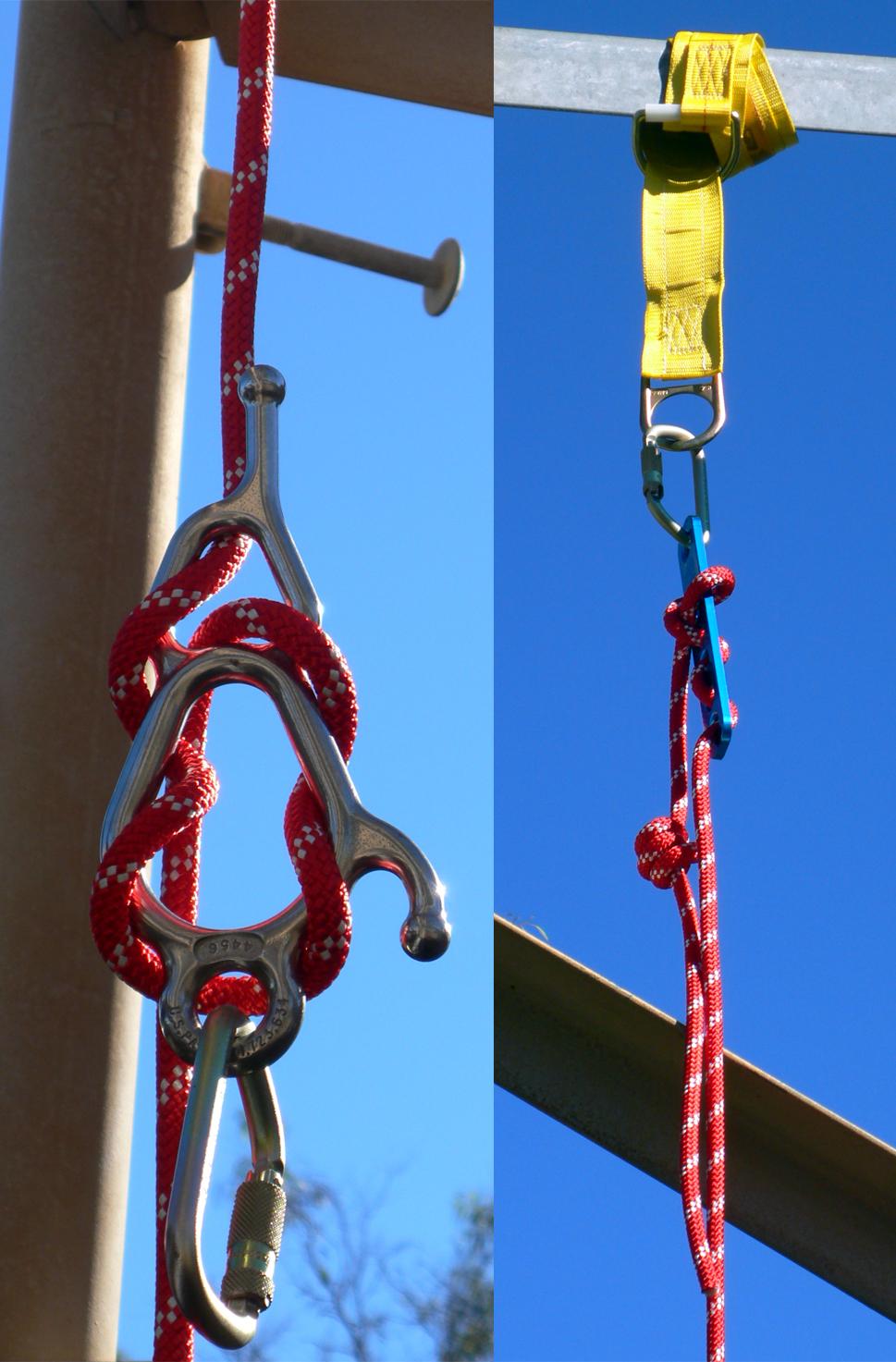
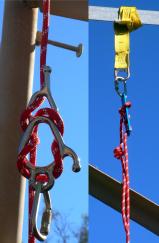
Tower Rescue Practice
Jim Hale, HPWREN staff, reflects on the need for safe tower climbing
for HPWREN installations and maintenance, as well as the necessity of
practicing tower rescues.
 November 10, 2007
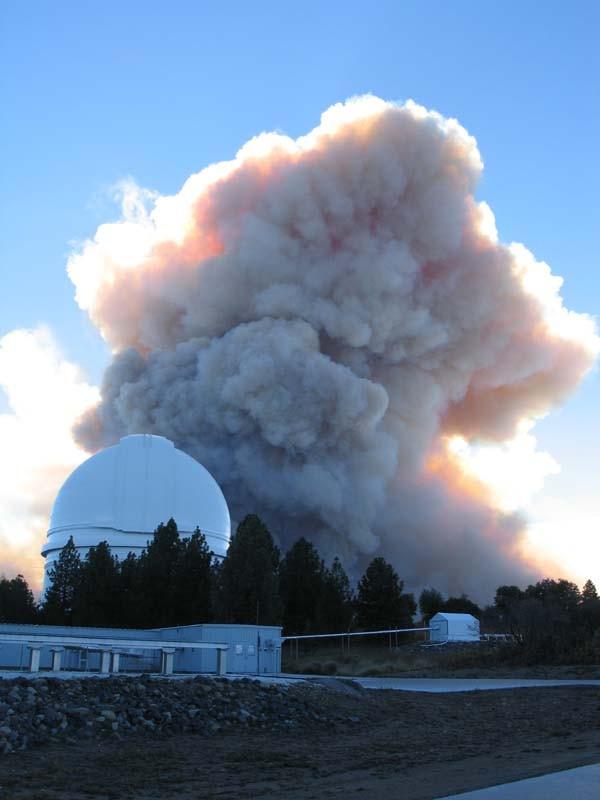
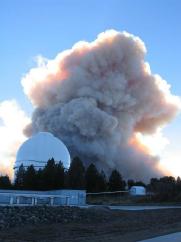
HPWREN Aids Firefighters on Palomar Mountain
For the past four years, astronomers at the California Institute
of Technology's Palomar Observatory in Southern California have
been using the High Performance Wireless Research and Education
Network (HPWREN) as the data transfer cyberinfrastructure to further
our understanding of the universe. During the recent firestorms in
southern California HPWREN was used at the observatory for a much
more down-to-earth purpose -- providing vital emergency communications
when all other resources were cut off.
 November 8, 2007
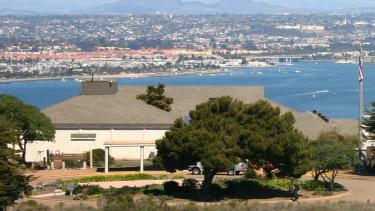
6th Annual HPWREN Users meeting held at the Cabrillo National Monument
The 6th Annual HPWREN Users meeting was held on November 6, 2007
in the auditorium of the Cabrillo National Monument, and hosted by
the National Park Service.
 October 30, 2007
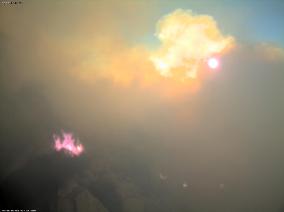
HPWREN camera use during the October 2007 San Diego Fires
HPWREN cameras at various sites were reported as highly valuable,
both by first responders, as well as by the public.
 October 17, 2007
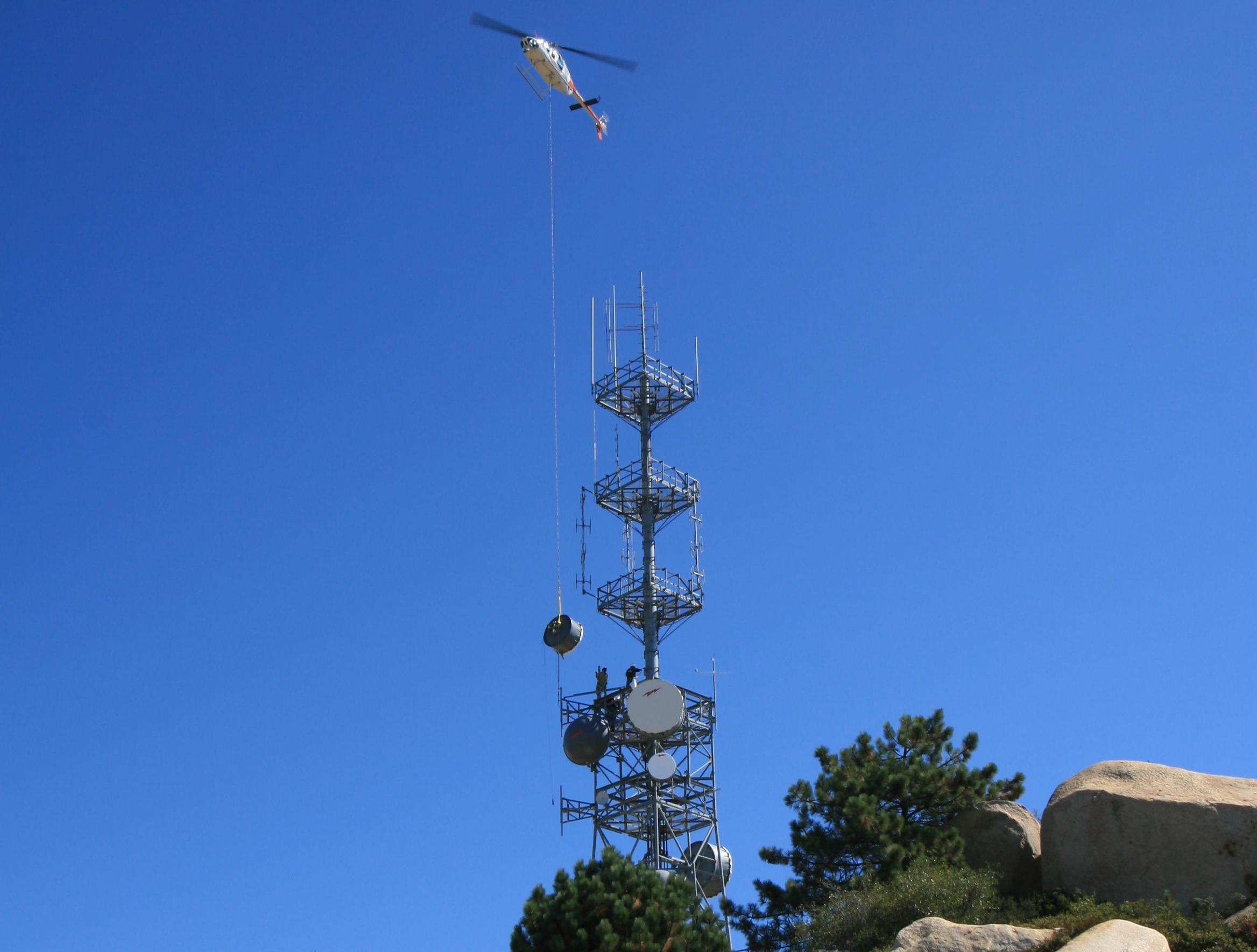
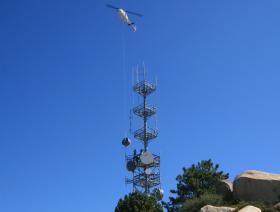
The HPWREN backbone now extends via an FCC-licensed path from the
ocean to the mountains
The radio and antenna replacement for a link in the southern loop
of the HPWREN backbone finally allows for an all FCC-licensed path
from coastal area to Mt. Laguna. This was an important step towards
stabilizing the performance of the network for many sensors and
other sites connected from the mountains and the desert.
 October 16, 2007
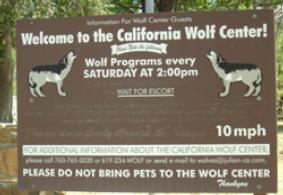
Celebrating Wolf Awareness Week with Kim Miller
and Erin Hunt at the California Wolf Center
National Wolf Awareness Week is celebrated each year during the third
week of October. There are three things that we try and do each and
every year," explains Kim Miller, ".... education .... conservation
.... and research ...."
 September 21, 2007
UCSD CSE accomplishments of research on resource management in
HPWREN: QoS scheduling, routing and power management
The research focus of a UCSD Computer Science and Engineering team,
which is collaborating with the HPWREN project, has been on providing
QoS to various applications in HPWREN while minimizing the power
consumption of battery operated wireless nodes.
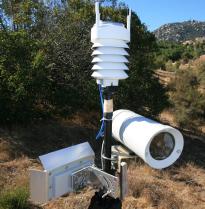 September 11, 2007
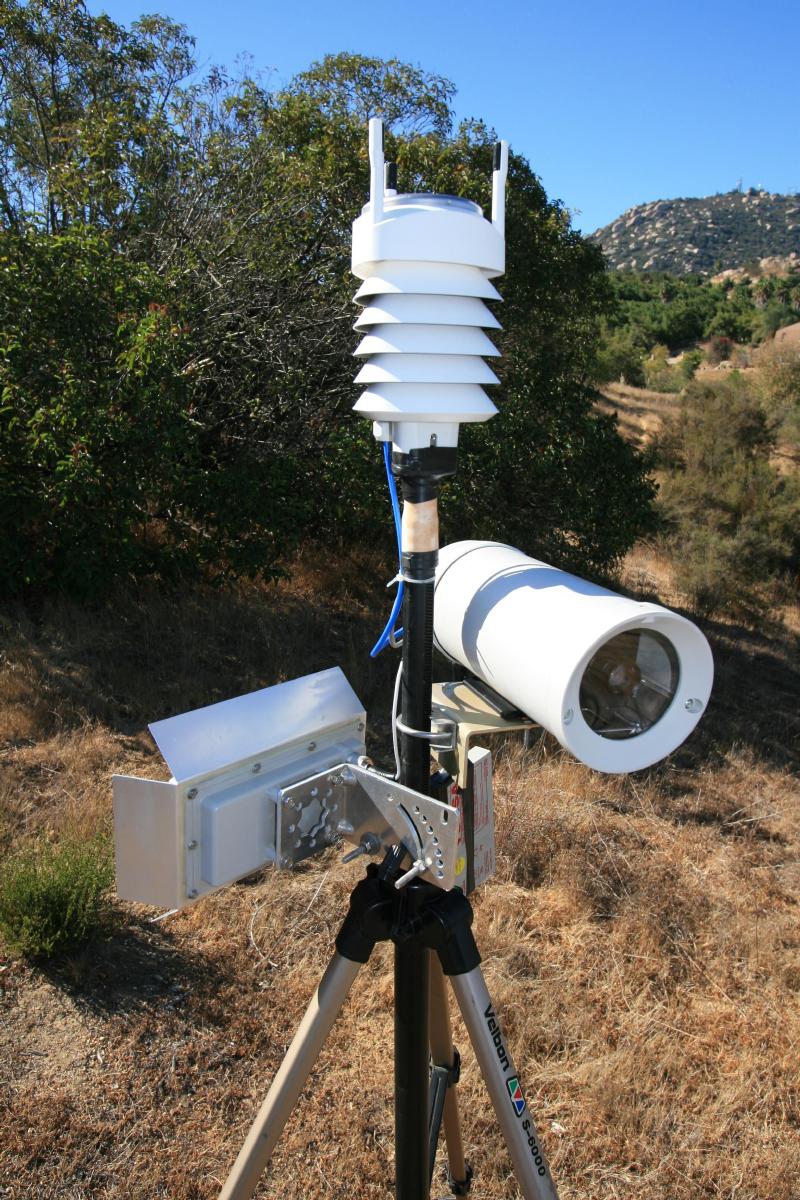
Experimental setup for ad-hoc long-distance wireless camera and
weather sensor deployment
With HPWREN's interest in integrated systems, an attempt was made
to create a solid-state integrated wireless camera and weather
station setup, with the potential for a data communication reach
of several miles.
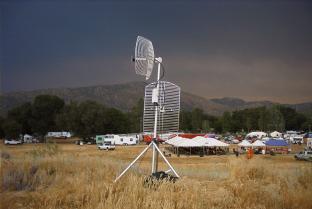 August 16, 2007
2006 First Responder Survey of HPWREN Connectivity Deployment for
Incident Command Posts
Since 2003, the HPWREN project has been involved with public safety
networking deployment, specifically in the context of creating data
communications for Incident Command Posts, from where firefighting
efforts for large wildland fires were managed. To understand first
responder networking requirements, HPWREN staff administered a
survey in the summer of 2006.
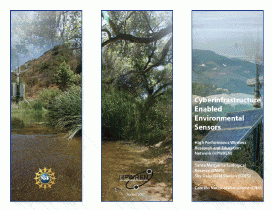 August 14, 2007
New HPWREN brochure describes cyberinfrastructure-enabled
environmental sensors
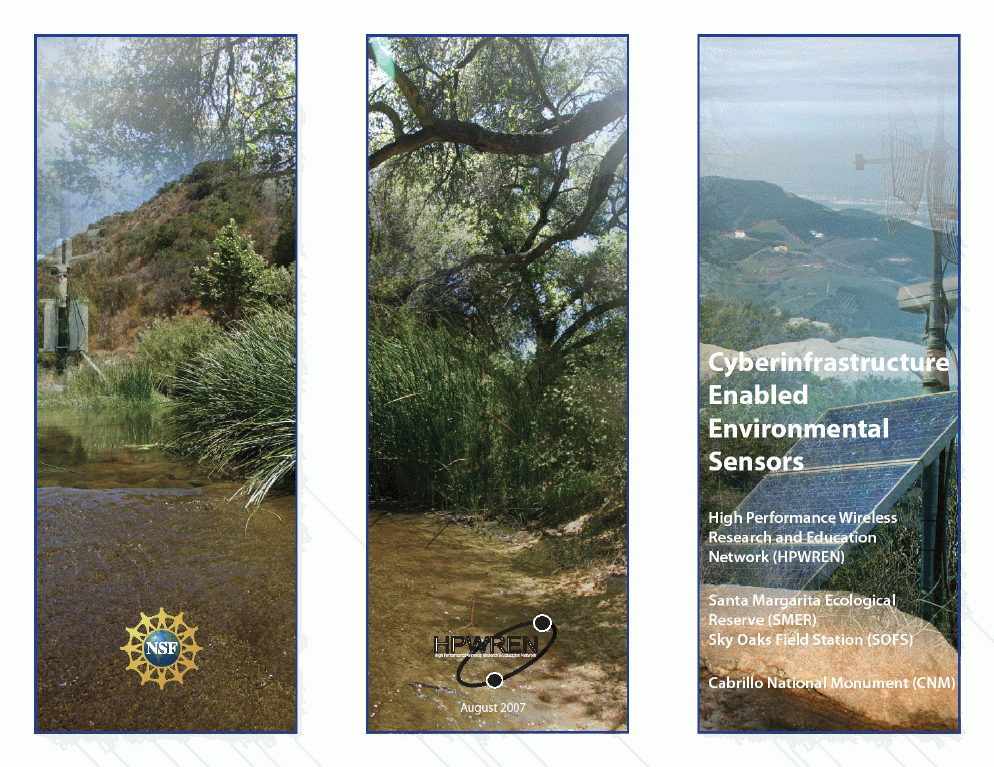
A new brochure on cyberinfrastructure-enabled environmental sensors
focuses on a small subset of the sensors connected to the HPWREN
network, including the collaborative nature of their deployment.
 August 8, 2007
HPWREN was Utilized for the Discovery of the Largest Exoplanet to Date
An international team of astronomers has discovered the largest-radius
and lowest-density exoplanet of all those whose mass and radius are
known, utilizing a global network of three small telescopes utilizing
mostly amateur-astronomy components and off-the-shelf four-inch
camera lenses: Sleuth telescope at Caltech's Palomar Observatory
in San Diego County; the Planet Search Survey Telescope (PSST) at
Lowell Observatory; and the STellar Astrophysics and Research on
Exoplanets (STARE) telescope in the Canary Islands.
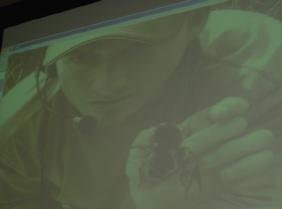 July 27, 2007
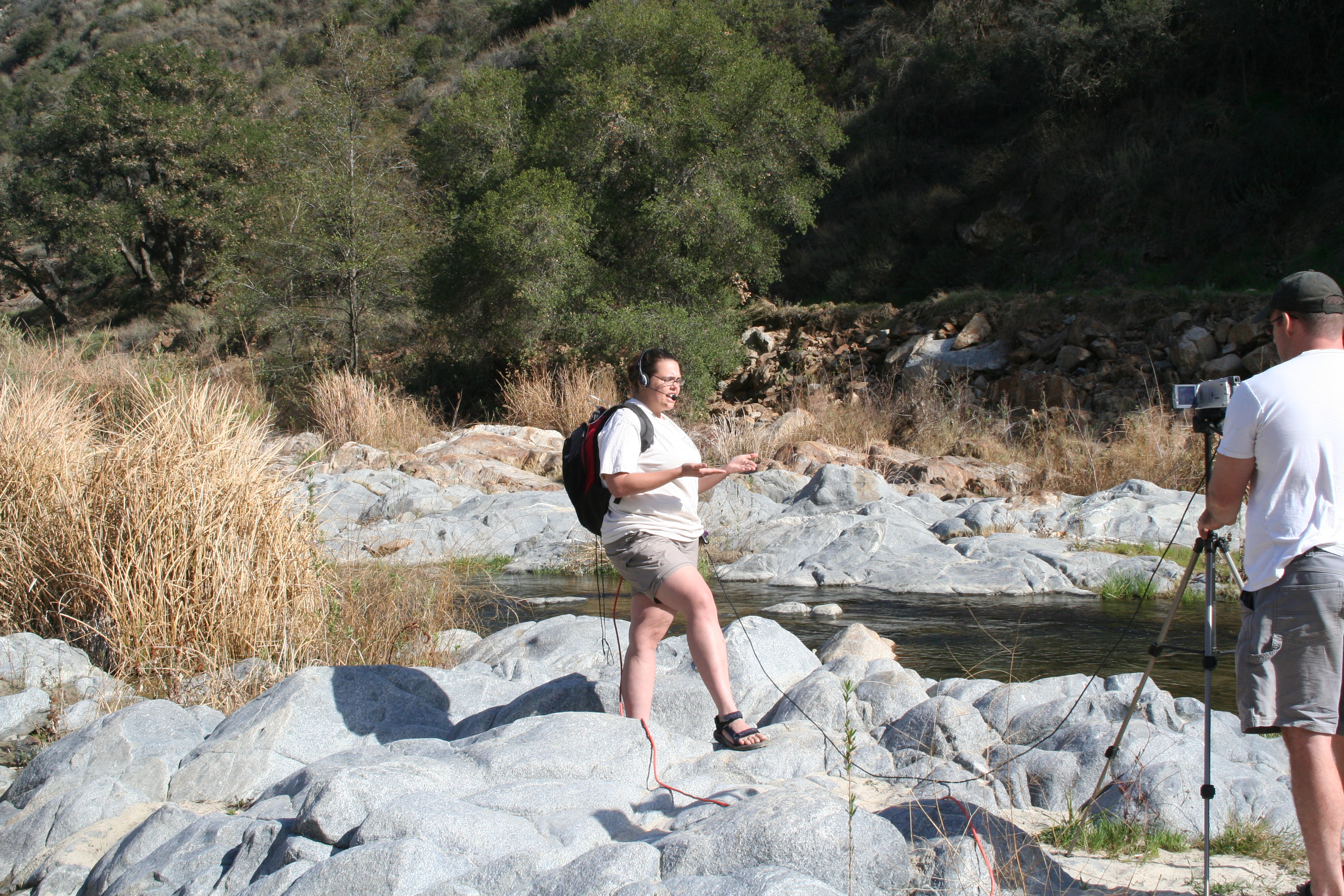
Pala Native Americans Take a Virtual Trip to Santa Margarita
Ecological Reserve via HPWREN LIVE and TDVNet
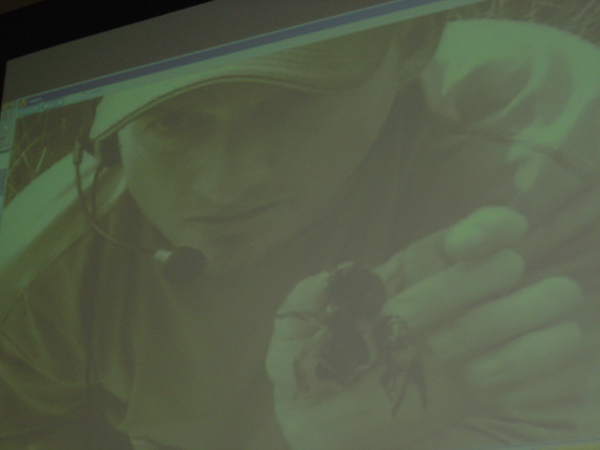
Pala Native American's youngest community members recently took
their second science adventure via the HPWREN LIVE pilot project.
That is, students from Pala Native American Reservation's Learning
Center participated in a Live Interactive Virtual Exploration (LIVE)
activity with a biologist at the Santa Margarita Ecological Reserve.
 July 17, 2007
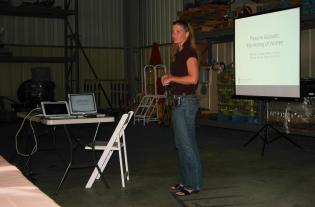
San Diego State University Masters Student Deborah Curless is
finishing her HPWREN-related thesis on networked acoustics sensors
at the California Wolf Center
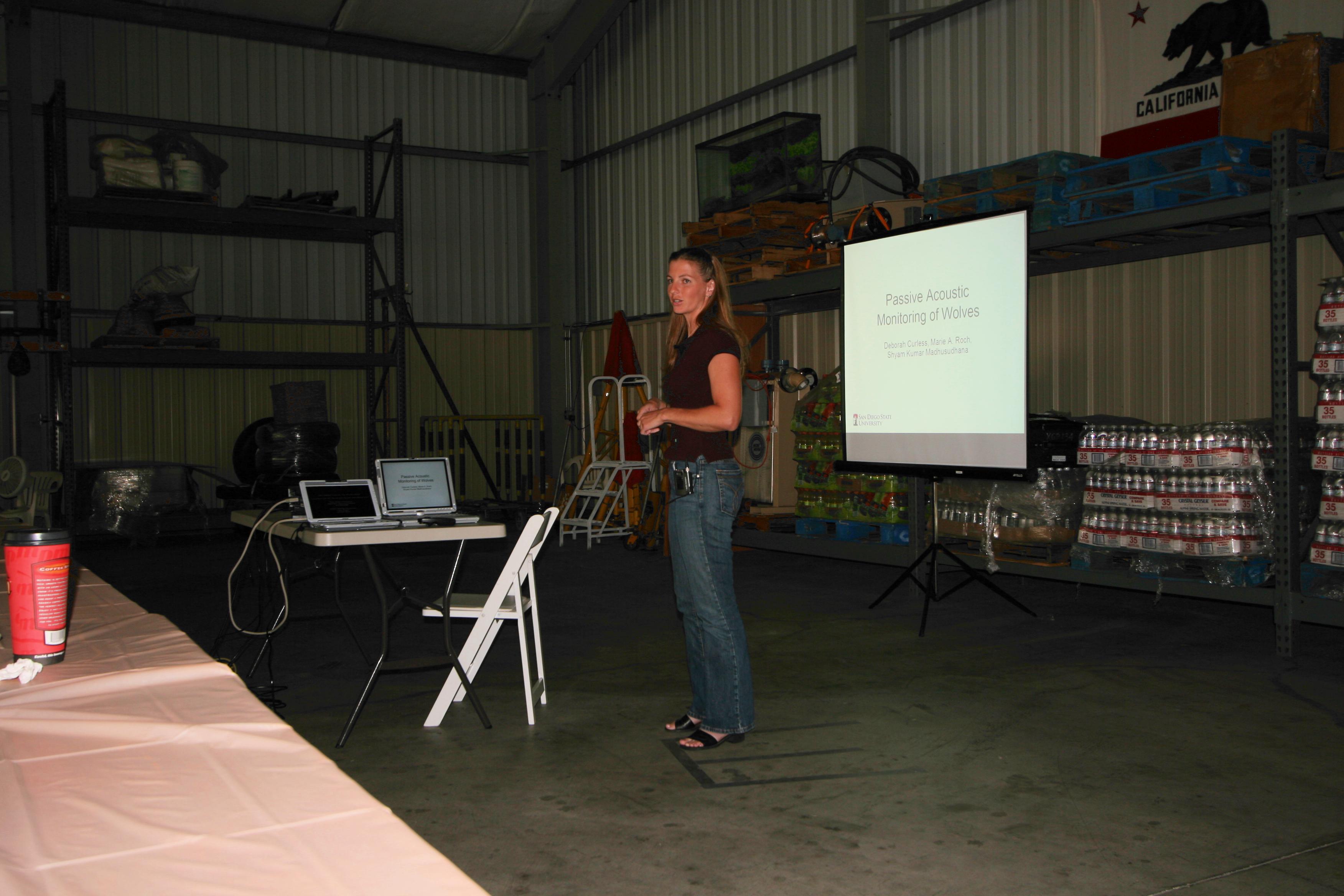
SDSU researcher Deborah Curless' thesis work utilized networked
acoustics sensors at the California Wolf Center to create a distributed
system to collect and classify the calls of wolves.
 June 12, 2007
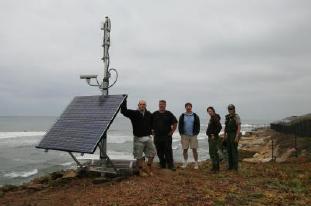
Cabrillo National Monument tidepool camera images and time lapse
animations accessible via HPWREN, distance education to follow
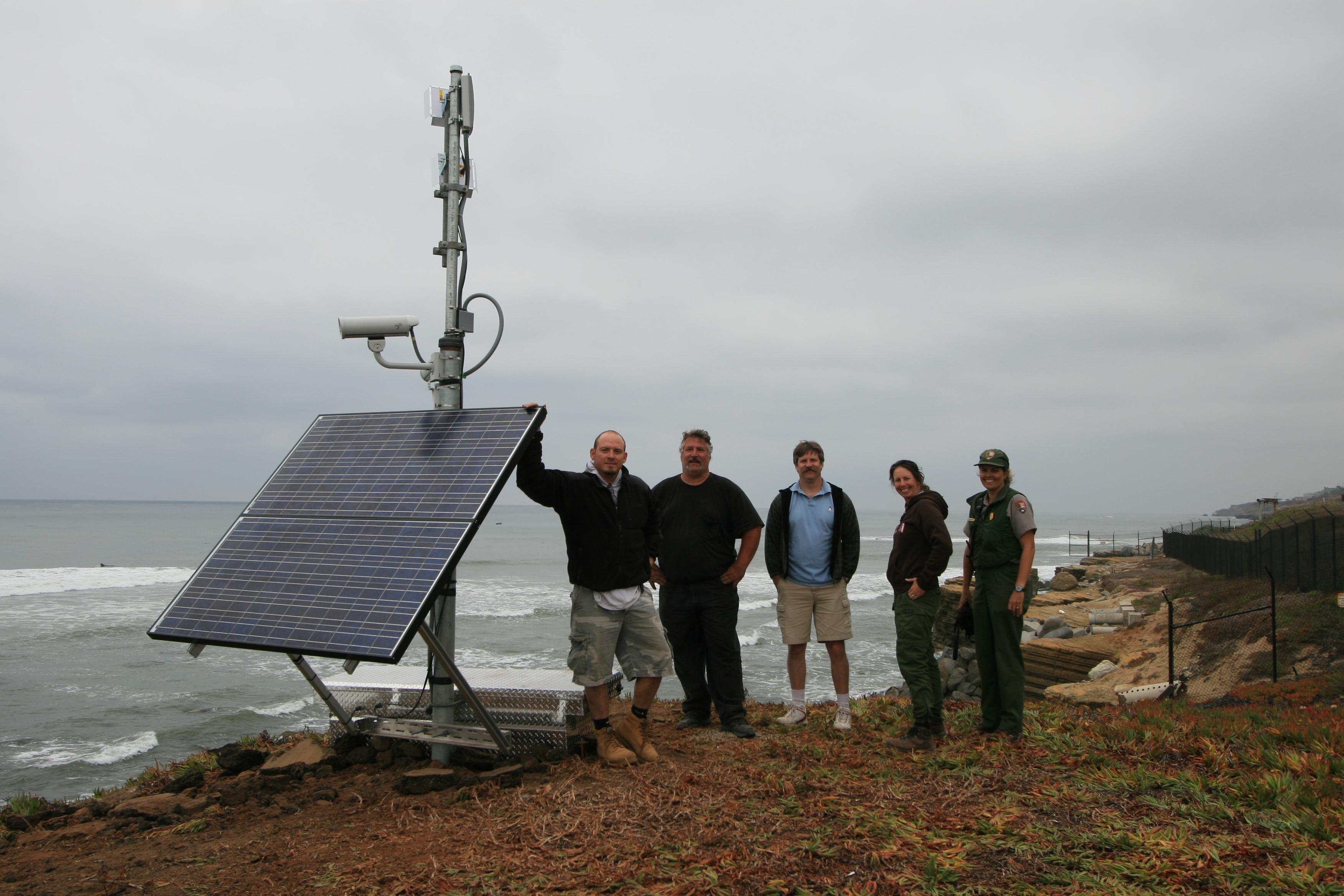
On June 11, 2007, the installation of two sets of cameras was
completed at Cabrillo National Monument, on the Point Loma peninsula
in San Diego. These cameras show the highly valued rocky intertidal
areas managed by the National Park Service (NPS).
 June 11, 2007
The California Science Center utilized HPWREN to educate Museum
Educators of Southern California
The Museum Educators of Southern California (MESC) held their Annual
Institute on Interpretation on June 08, 2007 at the California
Science Center. The conference title was "Teaching with New
Technologies." Chuck Kopczak, Curator of Ecology at the California
Science Center, presented a talk titled "Distance Learning: Bringing
the Outdoors (and Faraway) In."
 June 7, 2007
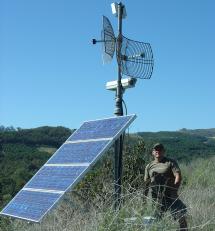
Monkey flowers, river water, and soil health...
...are only three of the many sensors delivering real-time information
from the Santa Margarita Ecological Reserve to scientists and
students around the world - thanks to Pablo Bryant, a research
technology manager at San Diego State University.
 June 2, 2007
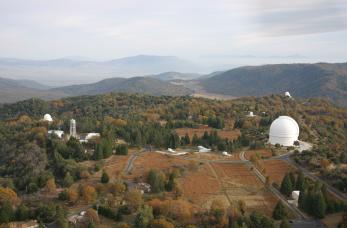
Palomar Observatory's Sleuth telescope was used, via HPWREN, to
confirm another planet discovery
The Sleuth telescope at the California Institute of Technology's
Palomar Observatory was used to confirm another planet discovery,
while utilizing HPWREN for data communications.
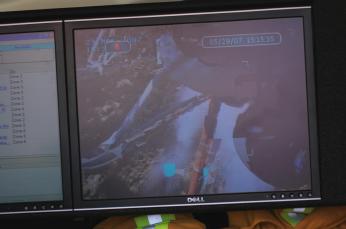 May 31, 2007
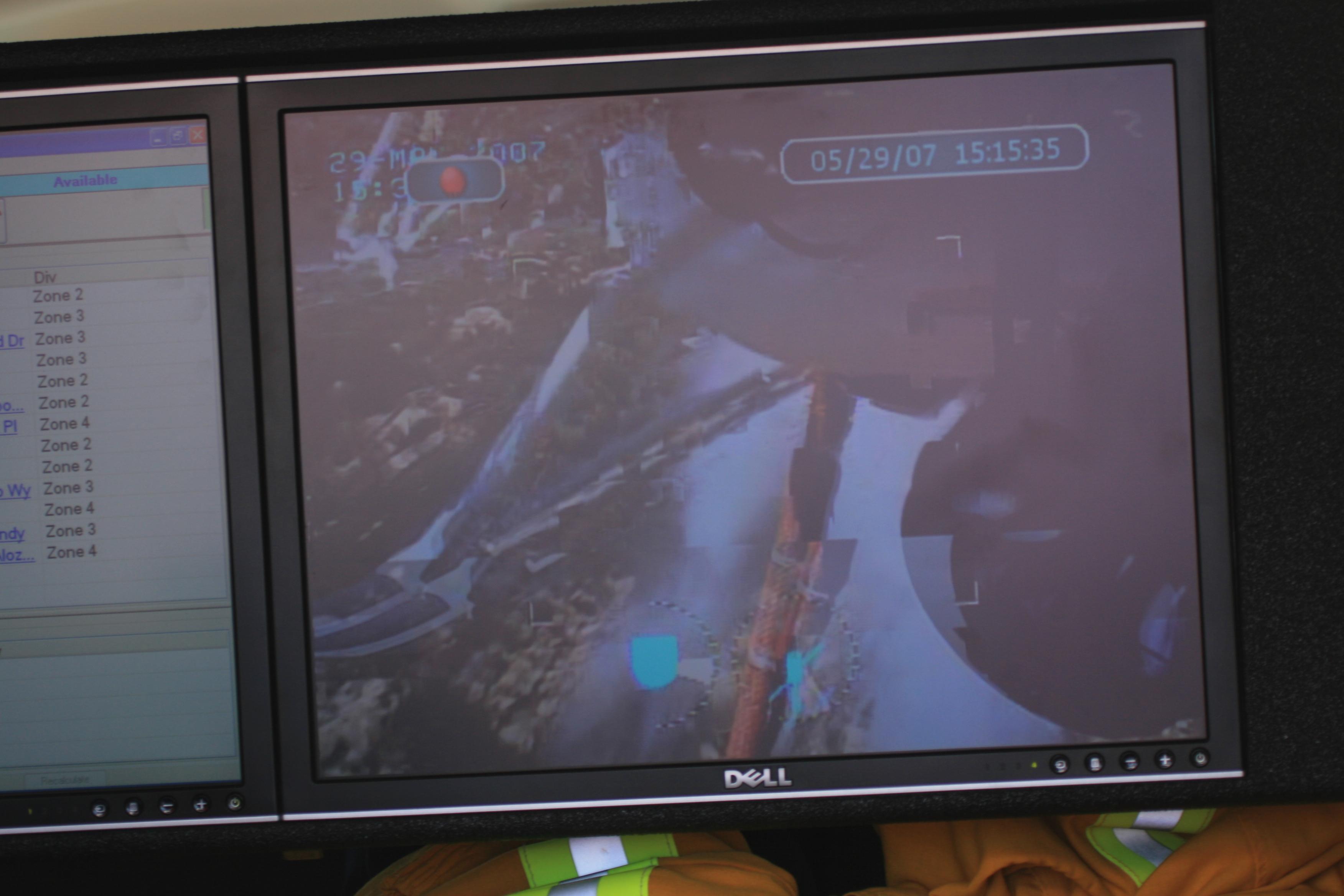
The 3Cs project and HPWREN demonstrated a multi-point video conference
with a SDFD firefighter helicopter real-time video downlink during the
2007 Interagency Wildland Fire Drill
On May 29, 2007, the Regional Command and Control Communications
(3Cs) project conducted a series of tests to connect with and pass
traffic across the HPWREN network, in conjunction with the local
Wildland Fire Drill hosted by the Barona Fire Department.
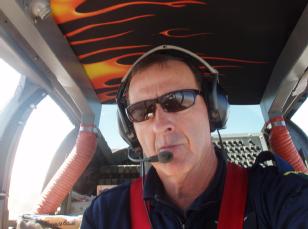 May 23, 2007
Smoke Signals: The Evolution of California Firefighting from the Eyes
of Fire Captain Ron Serabia
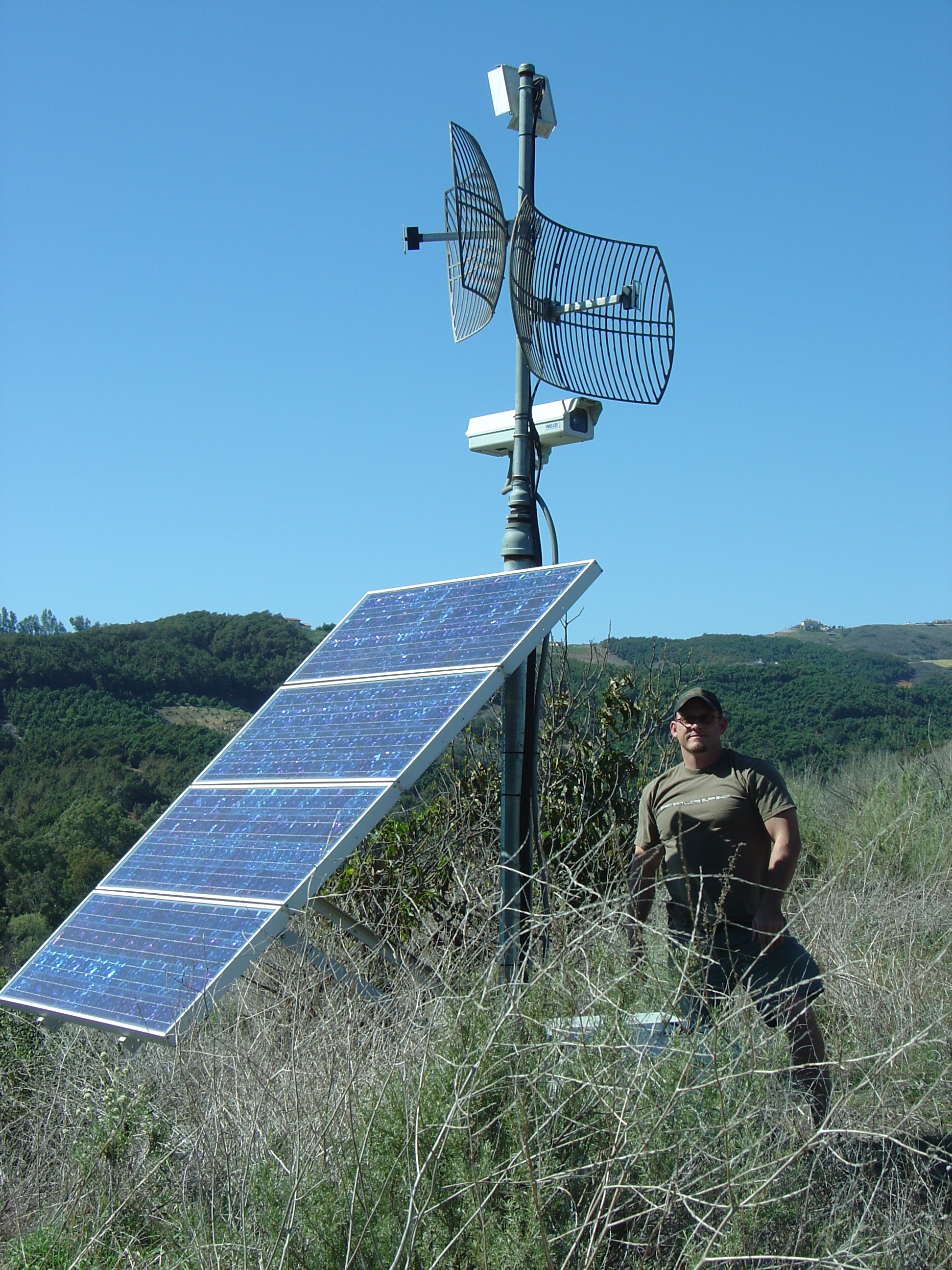
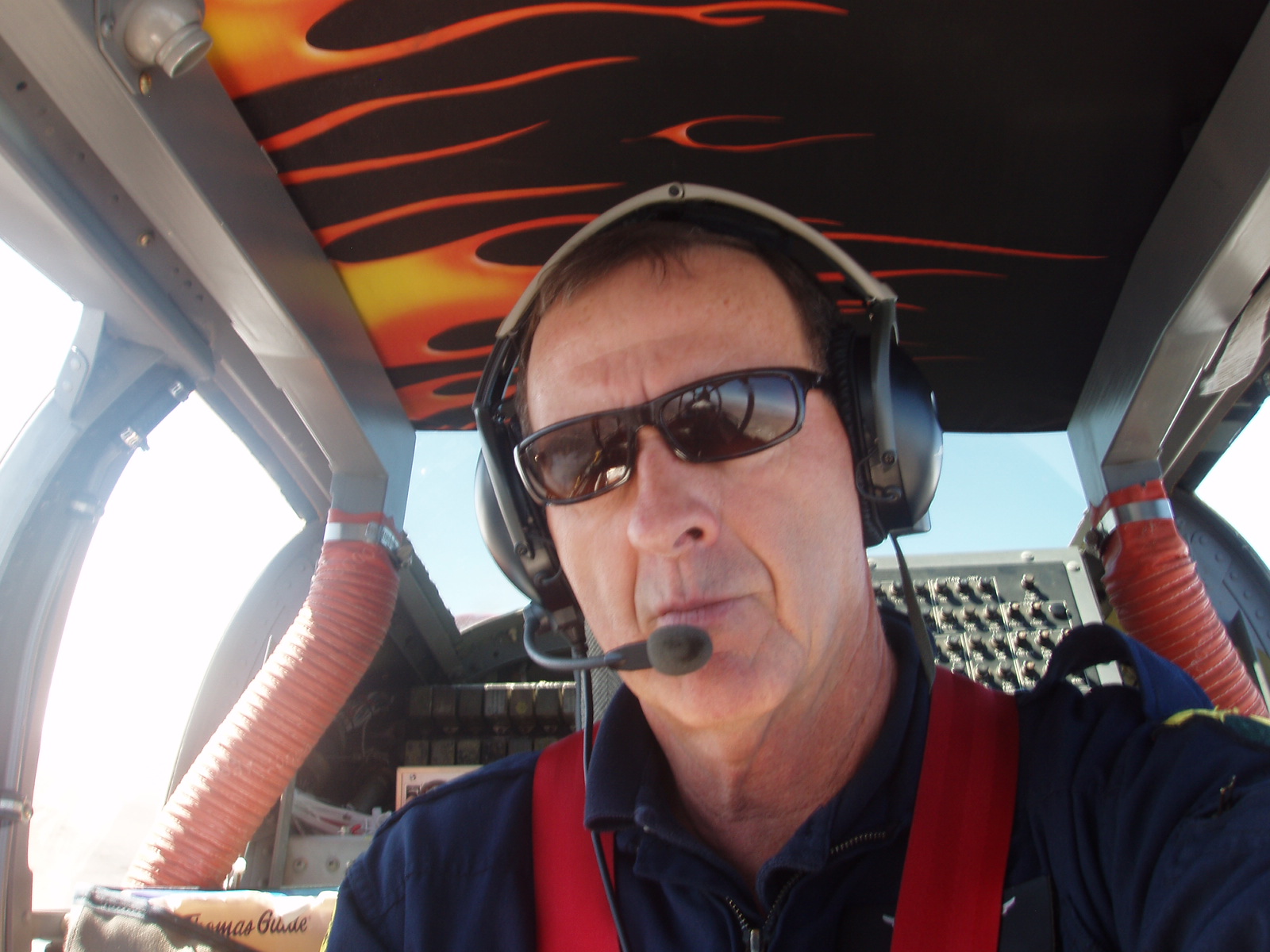
Whether flying aerial attacks against wildfires or scaling towers
to install wireless relays, southern California Fire Captain Ronald
Serabia has been at the forefront of a transformation in emergency
communications.
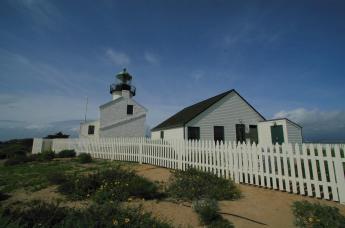 May 11, 2007
National Park Service collaboration extends HPWREN to the Cabrillo
National Monument
On May 4, 2007, orchestrated by Susan Teel of the National Park
Service, a connection between HPWREN and the Cabrillo National
Monument was established. Teel, Director of the National Park
Service's California Mediterranean Research Learning Center, provided
a summary which also points to a range of collaborators who helped
making this happen.
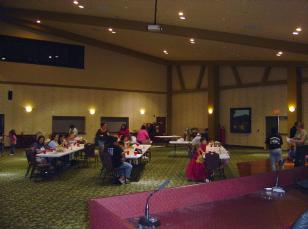 April 4, 2007
Pala Native American Reservation Participates in Palomar Observatory
Live Interactive Virtual Exploration via TDVNet and HPWREN
The Pala Native American Reservation hosted a Live Interactive
Virtual Exploration (LIVE) activity, which allowed participants to
"tour" the Palomar Observatory via HPWREN and the Tribal Digital
Village Network (TDVNet).
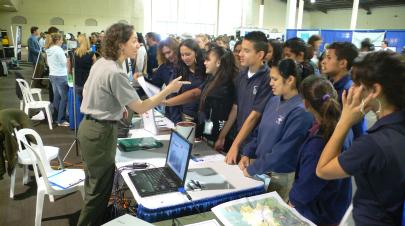 March 25, 2007
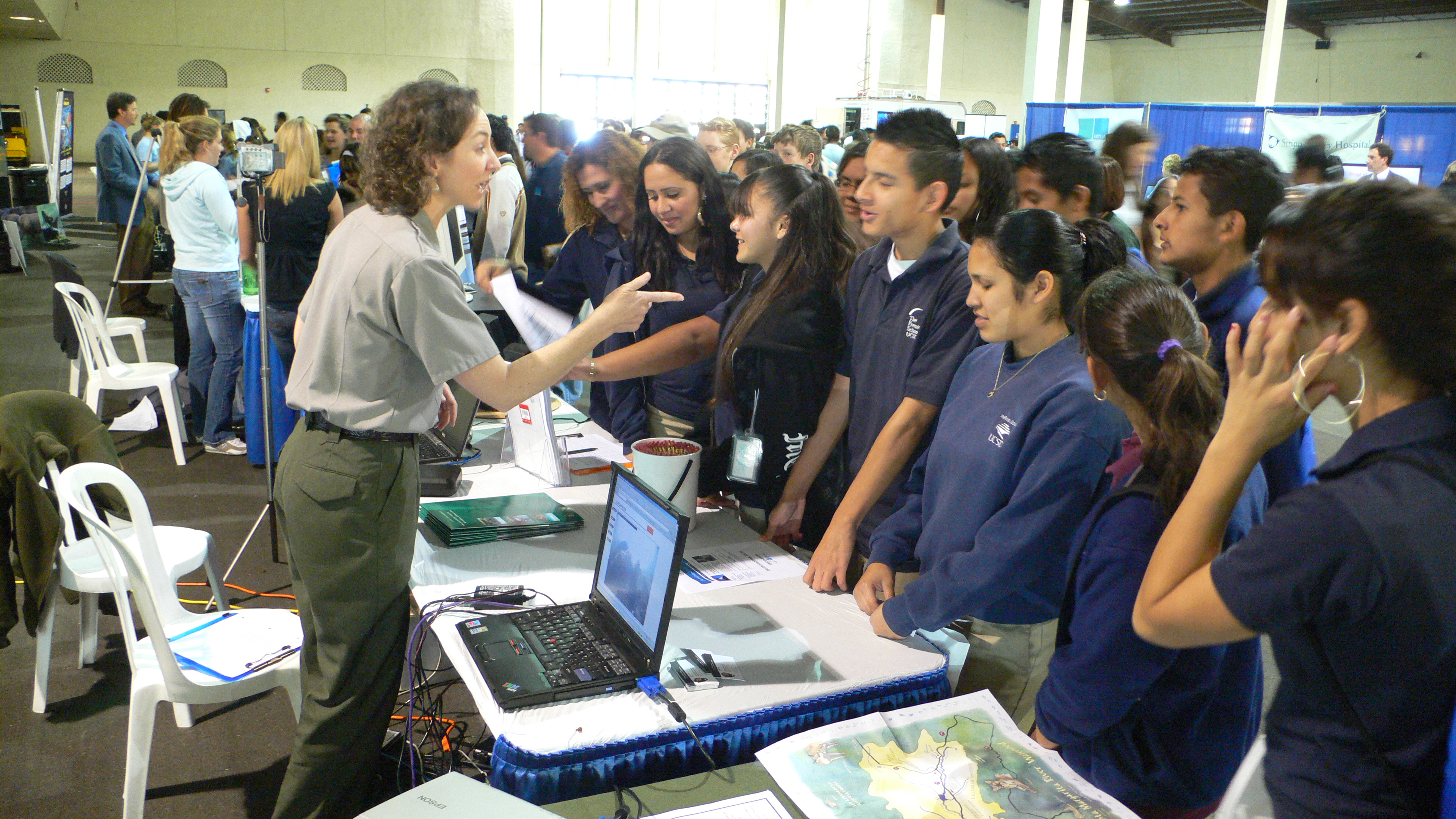
National Park Service exhibit at a High Tech
Fair showing LIVE technology with the Santa Margarita
Ecological Reserve via HPWREN
On March 14, 2007, the National Park Service's California Mediterranian
Research Learning Center and Cabrillo National Monument, in partnership
with HPWREN and the San Diego State University's Field Stations
Program, hosted a booth at the 2007 San Diego Science Alliance High
Technology Fair in Del Mar.
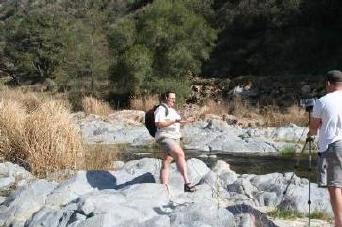 February 21, 2007
Lessons learned from the SDSU Santa Margarita Ecological Reserve
HPWREN Live Interactive Virtual Explorations events during the AAAS 2007
conference exhibit
On February 16th-18th San Diego State University's Santa Margarita
Ecological Reserve (SMER) collaborated with the National Science
Foundation funded High Performance Wireless Research and Education
Network (HPWREN) project to demonstrate the potential for long
distance research and education programs for an audience at the
AAAS 2007 annual meeting's National Science Foundation booth in San
Francisco. This article summerizes the activity from SMER, and
includes various lessons learned statements.
 February 20, 2007
National Science Foundation Exhibit at AAAS 2007 Showcases HPWREN - LIVE
In December 2006 the National Science Foundation invited HPWREN to
participate in their exhibit booth at the 2007 American Association
for the Advancement of Science (AAAS) annual meeting in San Francisco.
The objective was to show real-time cyberinfrastructure enabling
research and education activities as Live Interactive Virtual
Explorations (LIVE) of remote science sites.
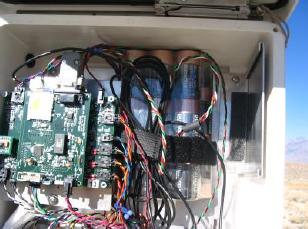 January 30, 2007
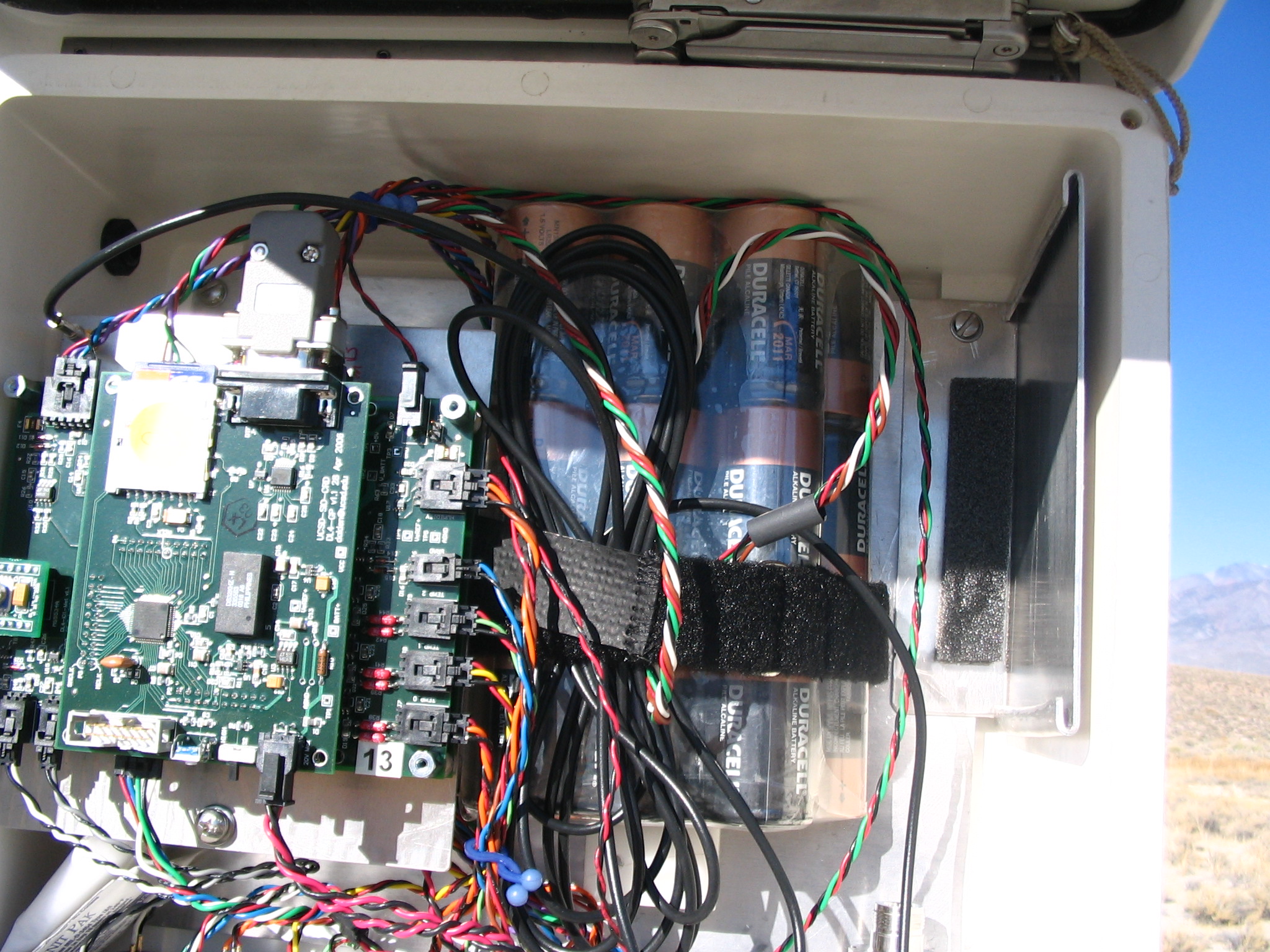
The DL4-Met Environmental Data Logger
The DL4-Met, based on the DL1-Met is an improved low cost, low power
environmental data logger with additional sensor channels, integrated
GPS and telemetry system. At SMER, for some of the existing
meteorological stations, old DL1-Met loggers will be replaced with
DL4-Met loggers, which will accomodate new fuel moisture and soil
moisture sensors.
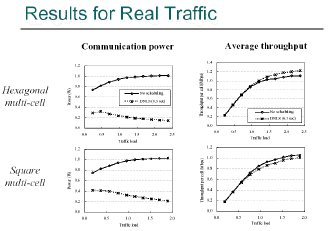 January 25, 2007
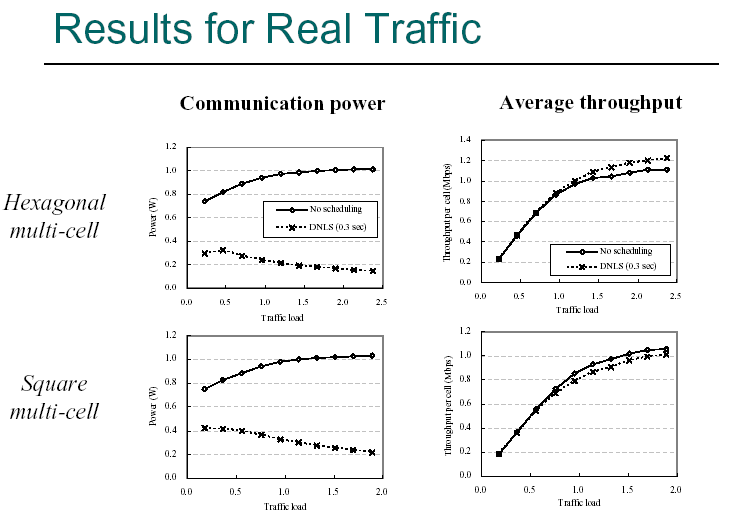
HPWREN-supported UCSD Master's student Daeseob Lim
graduated with his "Distributed Proxy-Layer Scheduling in
Heterogeneous Wireless sensor Networks" thesis
A graduate student researcher supported by HPWREN, Daeseob Lim,
recently finished his UCSD Master's degree thesis on a distributed
hybrid multi-cell scheduling algorithm for heterogeneous wireless
sensor networks that addresses these issues. Tajana Simunic Rosing,
UCSD professor in the Department of Electrical & Computer Engineering
was his thesis advisor and committee chair.
previous year -
next year
|